VIP
VIP


Exactly one year ago, frisbee was everywhere – the ultimate it-sport for young people. Every evening and weekend, parks and stadiums were packed with groups tossing neon-colored discs across every patch of grass. Slinging a printed frisbee over your shoulder? It looked like a quirky round bag, and it was the go-to style for anyone who wanted to be on-trend.
Social media was flooded with frisbee content, racking up insane views and likes. Coaches, venues, even frisbee clubs became red-hot commodities overnight. Suddenly, the frisbee industry was hailed as a "blue ocean" – tournaments popped up left and right, and everyone was calling it the next "national sport."
But fast forward less than a year, and that frisbee fever has cooled off dramatically.
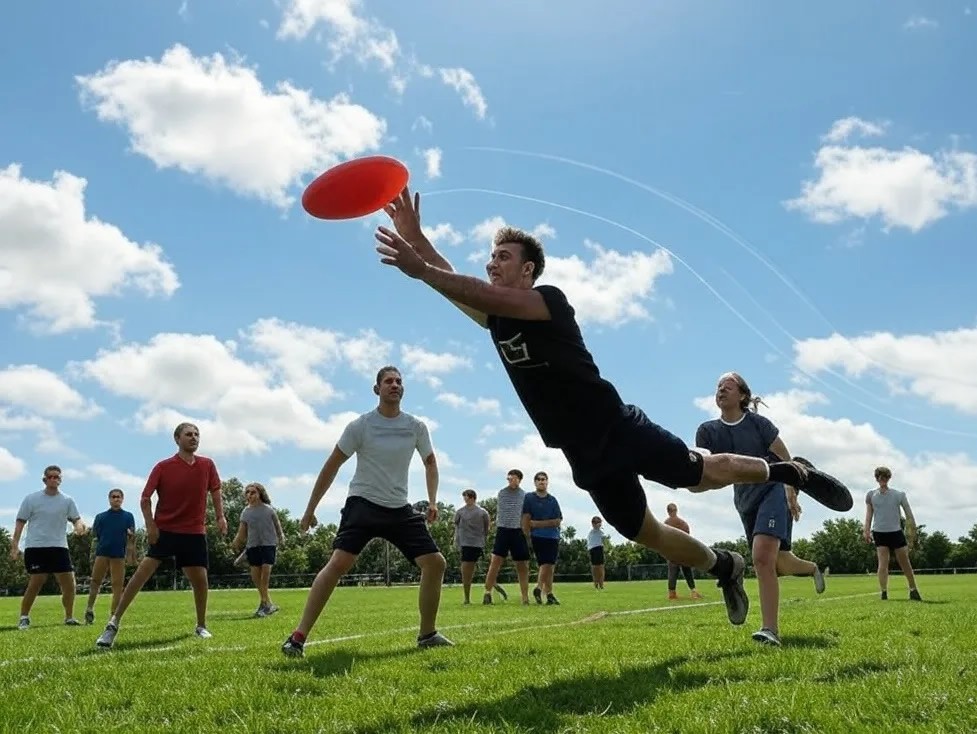
The shift is hard to miss. On social platforms, frisbee posts now get barely any engagement – the only times it still makes waves are when a celebrity posts about it. Offline, it’s even starker: frisbee clubs have seen their crowds vanish, with many shutting down entirely. Headlines about frisbee these days are all about "cooling down" or "fizzling out."
Ka Lu Li (not his real name) was one of the first people to popularize frisbee in Guilin, Guangxi. He’s lived through the sport’s wild rise, explosive peak, and rapid decline firsthand.
"Now, only 10% to 20% of the people who played during the boom are still around," he told Time Weekly. "But here’s the silver lining: those who stayed are true enthusiasts – they’re dedicated, have real skills, and keep coming back. Training sessions and tournaments are more regular than ever. When the hype dies down, only the people who truly love the game stick around."
So what exactly happened to frisbee? And where are all those clubs now?
Ka Lu Li’s story tells the tale. Back in May 2022, riding the social media wave, he and his friends launched Guilin’s first frisbee club – Guilin Frisbee Alliance. Soon after, more clubs popped up one after another, and the number of players skyrocketed.
The peak hit in September 2022. At that time, there were 7 dedicated frisbee clubs in Guilin, plus another 3+ football or rugby clubs adding frisbee events to their lineup. All in all, more than 10 organizations were hosting frisbee games.
Ka Lu Li’s club was hosting 7-8 sessions a week, each capped at around 15 people. Most events sold out within minutes of going live on booking platforms. Other clubs were just as busy – some even posted urgent job ads for frisbee coaches.
Then came the turning point in November 2022. "The weather got cold, so we had to move to indoor venues," Ka Lu Li explained. "That pushed up costs and cut into profits. Plus, fewer people want to exercise when it’s freezing. We dropped down to just 2-3 sessions a week."
Other clubs struggled too. Between November 2022 and early 2023, 5 frisbee clubs in Guilin shut their doors for good.
The ones that survived? They’ve had to adapt. "We canceled our commercial sessions in December," Ka Lu Li said. "Now we have a 20-person competitive team that trains seriously and competes in tournaments. Another club still runs 4-5 commercial sessions a week and teaches in universities – but they’re barely breaking even. The owner’s a frisbee fan too, so it’s really a labor of love."
Club owners agree: the cold weather started the decline, but it was a perfect storm. Frisbee wasn’t trendy anymore, travel came back post-pandemic, and young people had way more options for fun. "Even when the weather warmed up, the crowds never returned to what they were," one owner said.
The Diehards Still Flying High
While the numbers are smaller, the remaining frisbee players are more loyal than ever.
"Most of the people still playing have 3 to 6 months of experience – they’ve got skills and show up regularly," Ka Lu Li said. That shift has forced clubs to change how they operate.
"Before, it was mostly newbies, so we focused on small-field games – smaller spaces, lower intensity, easier for beginners," he explained. "Now it’s all big-field games. The players are more experienced, and they want the thrill of real competition."
Tournaments have also become a regular thing. A quick search online shows frisbee tournaments being livestreamed across China every week. In Guangxi, Nanning (the capital) hosts small to medium tournaments every two weeks, drawing teams from across the province. Larger events happen every six months.
At the end of May, the Guangxi Frisbee Open – organized by the Guangxi Social Sports Development Center – is set to kick off. Ka Lu Li and his team have been training for over a month to compete.
But here’s the catch: frisbee tournaments aren’t exactly big moneymakers. Most local tournaments offer 3,000 to 5,000 yuan (around \(430 to \)720) for the champion team. Players have to cover their own accommodation and food, plus a registration fee of around 100 yuan ($14) per person. For most teams, the costs far outweigh any prize money.
Nationwide, frisbee tournaments have tiny prize pools compared to other sports. With fewer viewers and less commercial exposure, sponsors aren’t willing to put in big money.
"Our training costs 1,500 yuan ($215) per session, and we train at least twice a week during competition season," Ka Lu Li said. "Traveling to tournaments can cost thousands, even tens of thousands of yuan. The biggest factor for a club’s survival is commercial sponsorship."
His team is lucky – they have long-term sponsors covering training and travel costs. It’s not enough to pay the players well, but it takes the financial pressure off. Most other teams aren’t so fortunate – they’re just "playing for the love of the game."
A Surprise New Entrant
Interestingly, one new frisbee club in Guilin has found success even during the slump.
Launched in January 2023, "Challenge Frisbee" set up shop in a district that previously had no frisbee clubs. The venue offered them a low-cost rental to attract foot traffic, and the lack of competition gave them a unique edge.
Today, only two organizations in Guilin still offer public frisbee sessions: a football club charging 36 yuan (\(5) per person, and Challenge Frisbee with a 23 yuan (\)3) price tag. Challenge Frisbee hosts 4-5 sessions a week, and their latest event had 14 people sign up and pay.
"Everyone thought the market was saturated," Ka Lu Li said. "But maybe the old clubs had formed a closed circle – new players couldn’t break in because of the skill gap. Challenge Frisbee is drawing all new people. Turns out, there are still young folks willing to give frisbee a try."
Back to Niche – But Here to Stay
Nationwide, though, frisbee’s return to being a niche sport seems inevitable.
In Guangzhou, once a frisbee hotspot, the top club Litchi Frisbee went from 30 sessions a week in 2022 to just 6-8 this year. Insiders say only 5 or 6 clubs in Guangzhou can still field stable teams for competitions.
Zheng Chun, a lead instructor at Yikun Frisbee Academy, once predicted that over 90% of frisbee clubs wouldn’t survive 2023. Many people jumped in during the 2022 hype, but now they’re sitting on the sidelines.
Ka Lu Li thinks frisbee still has a long future – just not as a viral trend. "The hype and quick profits are gone," he said. "But frisbee will keep flying – driven not by loud social media buzz, but by the small group of people who’ve made it a long-term habit."