VIP
VIP


Let’s cut to the chase—there’s no universal“best”material for a ping pong table top.What works for a pro grinding out 5-hour training sessions is worlds apart from what you need for weekend garage games or backyard barbecues.After testing three tables over five years,chatting with fellow players,and sifting through hundreds of user reviews,I’m breaking down the top options by use case.No jargon,just honest feedback on feel,durability,and value—so you can stop overthinking and start playing.
1.Solid Wood(Birch/Maple):For Serious Indoor Players
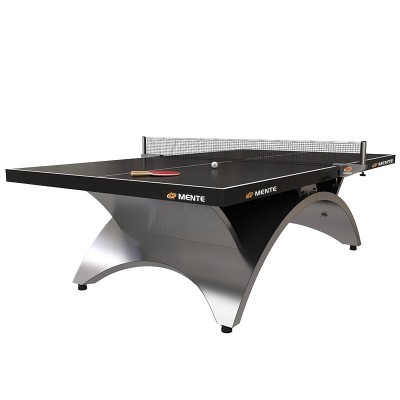
If you’re a competitive player or crave that tournament-level feel,solid wood(usually birch or maple)is the gold standard.Let me tell you—its performance is unmatched.The ball bounces so consistently,it’s like playing in a professional hall:no dead spots,no unpredictable jumps,just pure precision.I played on a solid maple table at a local club for years,and the way it“grips”the ball during spins?Chef’s kiss.It responds to every subtle movement of your paddle,making it ideal for practicing serves,loops,and delicate drops.

But here’s the catch:solid wood is high-maintenance.It hates humidity—one club owner told me they had to replace their table after a rainy season because the edges warped,even with a dehumidifier running 24/7.And the cost?Yikes.We’re talking 3x the price of a composite table(think 10k+for a quality model).User reviews are split:“Worth every penny for the professional feel”gushes a competitive player,while a home user complained,“I spent 10k on a maple table and now I’m terrified to let my kids near it.”
Who it’s for:Serious players with a climate-controlled space and time to wax the surface monthly.
Who it’s not for:Families,casual players,or anyone who doesn’t want a“diva”table.
2.Maple Composite(3mm Maple Top+High-Density Core):The Family Sweet Spot
For most households—families,casual players,or those who want quality without the hassle—maple composite is the clear winner.It’s like getting 80%of the solid wood feel with half the maintenance and cost.I switched to this after my solid wood table became too much work,and honestly?I don’t miss the upkeep.The bounce is almost as consistent:ITTF standards require a ball dropped 30cm to bounce 23-26cm,and my composite table hits that mark every single time.
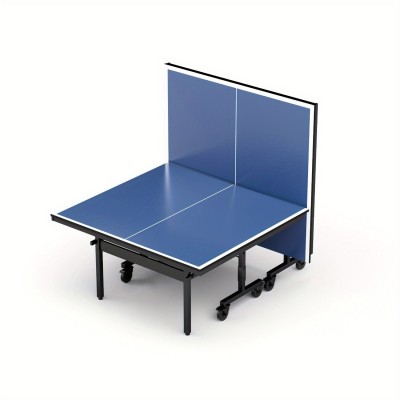
What I love most is its durability.One family with two kids reviewed on a sports site that their maple composite table survived juice spills,crayon doodles,and intense forehand smashes for 3 years with zero warping.Another user noted,“I live in a humid city and never use a dehumidifier—still flat as day.”It’s pricier than basic fiberboard(around 6k-8k),but it lasts 8-10 years—way longer than cheaper options.
Who it’s for:Families who play 2-3 times a week,casual players who want quality,or anyone who hates high-maintenance gear.
Pro tip:Look for a 3mm maple veneer and high-density fiberboard core—this combo balances feel and durability.
3.High-Density Fiberboard(HDF):Budget-Friendly&Tough
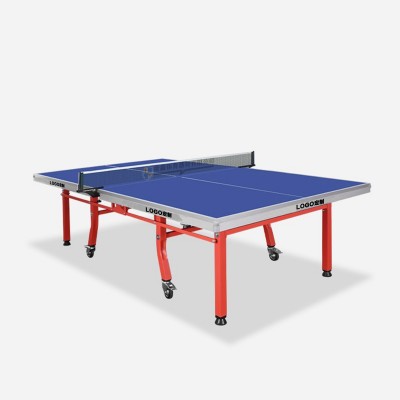
If you’re on a budget or have a chaotic household(read:kids,pets,frequent game nights),high-density fiberboard(HDF)is your hero.Let’s be clear—it’s not the fancy option,but it’s tough as nails.I have a friend who’s had an 18mm HDF table in his garage for 4 years:kids climb on it,drinks get spilled,and it still bounces evenly.The key is thickness:go 18mm or thicker,because thinner HDF(15mm or less)gets dents fast.
One Amazon reviewer said their 16mm HDF table held up to weekly game nights for 2 years,while another complained that a 12mm model developed dead spots after 6 months.Humidity can still be an issue(one user in Texas said theirs warped during a heatwave),but it’s easy to fix with a dehumidifier or table cover.At 3k-5k,it’s affordable,and most users agree it’s“more than enough for casual play.”
Big warning:Avoid cheaper MDF(medium-density fiberboard)at all costs.Countless reviews warn that MDF warps,bubbles,and cracks within a year—even in dry climates.One person summed it up:“MDF is a false economy—save$500 now,replace the table in 18 months.”
Who it’s for:Budget shoppers,casual players,or households with kids/pets.
Must-have feature:18mm+thickness for durability.
4.ABS Composite(Plastic Honeycomb Core):For Renters&Portability
Renters,small-space dwellers,or anyone who needs a table that folds up and moves easily—ABS composite is a game-changer.These tables are lightweight(I can carry mine up stairs alone),fold into a compact size,and are basically indestructible.I used one in my apartment for a year:it survived being stored under my couch,set up on uneven floors,and even a few accidental bumps.
The bounce is a bit“dead”compared to wood—one reviewer called it“functional but not exciting”—but for quick games with friends or impromptu matches,it’s totally fine.What’s great is that it’s waterproof:spill a soda?Wipe it up,no problem.One renter raved,“I moved three times with this table,and it never scratched or warped.Perfect for someone who doesn’t want a permanent fixture.”
At 2k-3k,it’s affordable for a portable option,but it’s not great for serious play.If you’re practicing spins or precision shots,the inconsistent bounce will frustrate you.
Who it’s for:Renters,small-space users,or anyone who needs portability over pro-level feel.
Perk:No assembly headaches—most fold out in 2 minutes flat.
5.Melamine Resin:The Only Outdoor Option Worth Considering
If you want to play outside—backyard,patio,or park—melamine resin is the only material that can handle the elements.I tested a Stiga outdoor table last summer,and it held up to scorching sun,sudden rainstorms,and even a few hail pellets.It’s UV-resistant(no fading!),waterproof,and can tolerate extreme temperatures—from freezing winters to 90-degree heat.
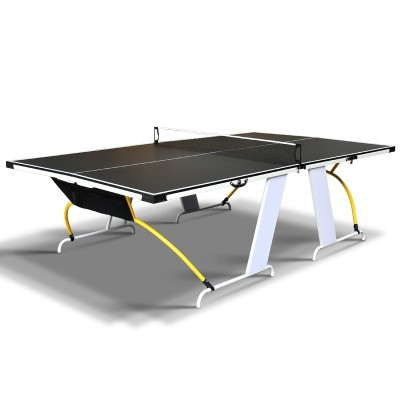
The bounce isn’t as good as indoor tables(think 70%of the feel),but for backyard barbecues or park games,it’s perfect.One customer in Florida left a review saying their melamine table survived hurricanes and 90-degree humidity with no warping.Avoid wooden or fiberboard tables outside—they’ll warp within weeks.Aluminum composite is another outdoor option,but reviewers say it’s slippery when wet,so melamine is safer.
Who it’s for:Outdoor players,beach/park game enthusiasts,or anyone who wants to play in the sun.
Price range:4k-7k(worth it—cheaper outdoor tables warp or fade in 6 months).
The Final Verdict:“Best”Depends on How You Play
Let’s wrap this up—there’s no one-size-fits-all,but here’s how to choose:
1.Serious indoor player:Solid wood(if you can afford it)or maple composite.
2.Family/casual player:Maple composite(quality+durability)or HDF(budget-friendly).
3.Renter/small space:ABS composite(portable+indestructible).
4.Outdoor player:Melamine resin(only option that lasts).
And a few universal tips from my experience and user reviews:
5.Thickness matters more than brand:18mm+for indoor HDF/composite,25mm for solid wood,4mm+for outdoor melamine.
6.Humidity is public enemy#1:If you live in a damp area,skip solid wood and MDF—opt for maple composite or ABS.
7.Avoid Tempered glass(tempered glass):It looks cool but shatters easily(one user’s kid ran into it,and it cracked)and has terrible bounce.
At the end of the day,the best ping pong table top is the one you actually use.Stop overcomplicating it,grab your paddle,and let the games begin!